Semi Truck Service Lift Requirements: Why 12,000 lb Capacity Matters
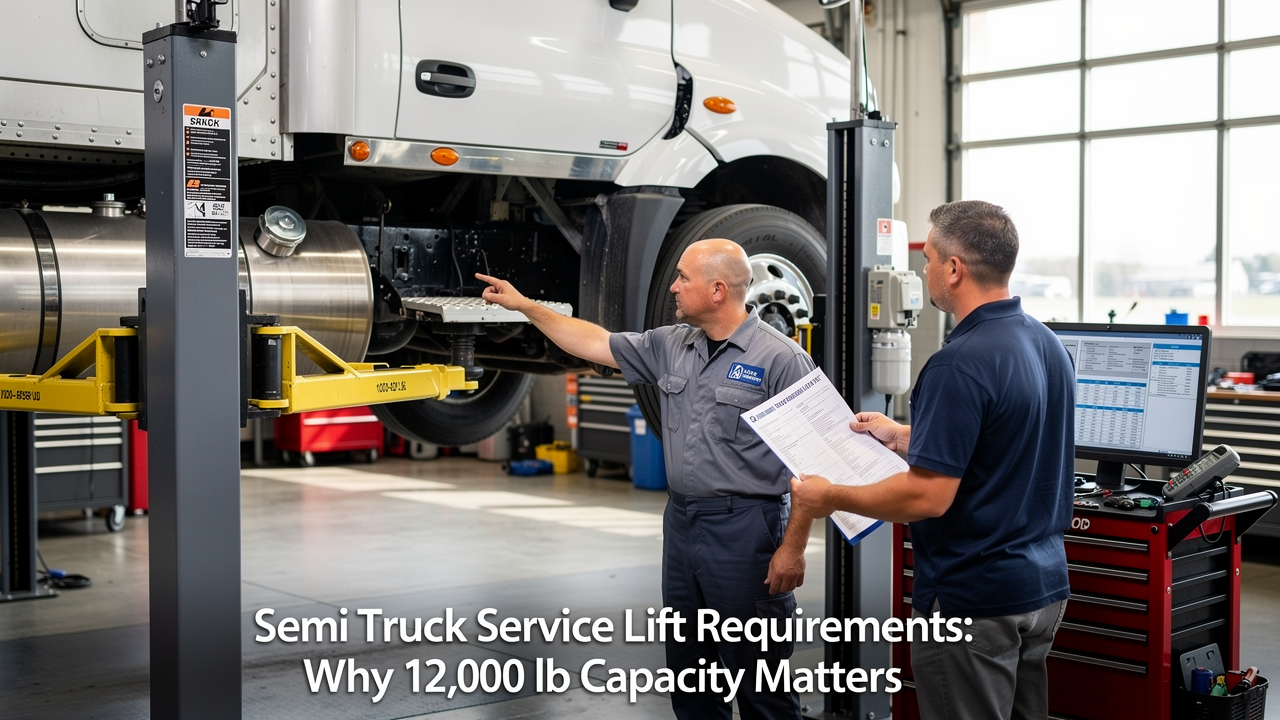
Semi truck lift requirements center on weight capacity and safety standards. Most commercial semi trucks require lifts rated for 12,000 pounds or higher. This capacity handles the front axle weight plus safety margins required by OSHA regulations.
The weight distribution of semi trucks creates unique challenges for service facilities. Understanding these requirements helps shop owners choose the right equipment for heavy vehicle maintenance.
What Weight Capacity Do Semi Trucks Actually Need?
Semi truck tractors typically weigh between 15,000 to 25,000 pounds without cargo. The front axle carries roughly 12,000 to 14,000 pounds of this weight. This means your lift must handle significant load even for basic maintenance.
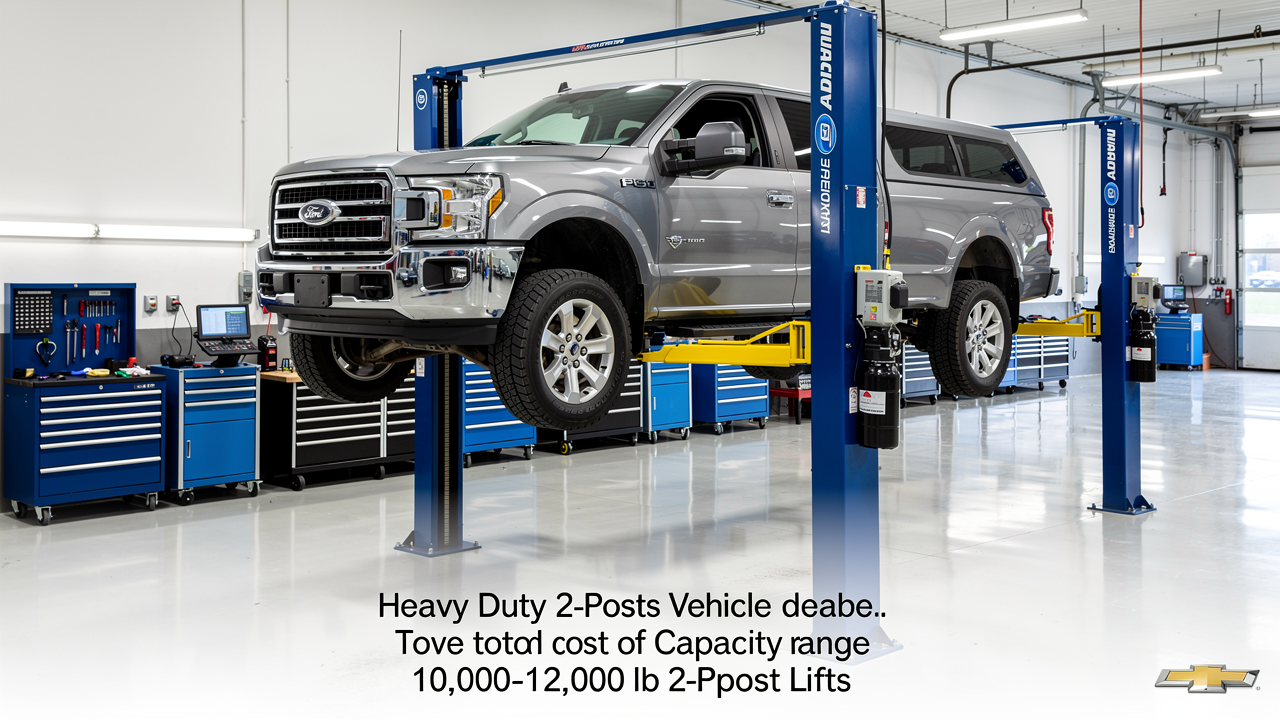
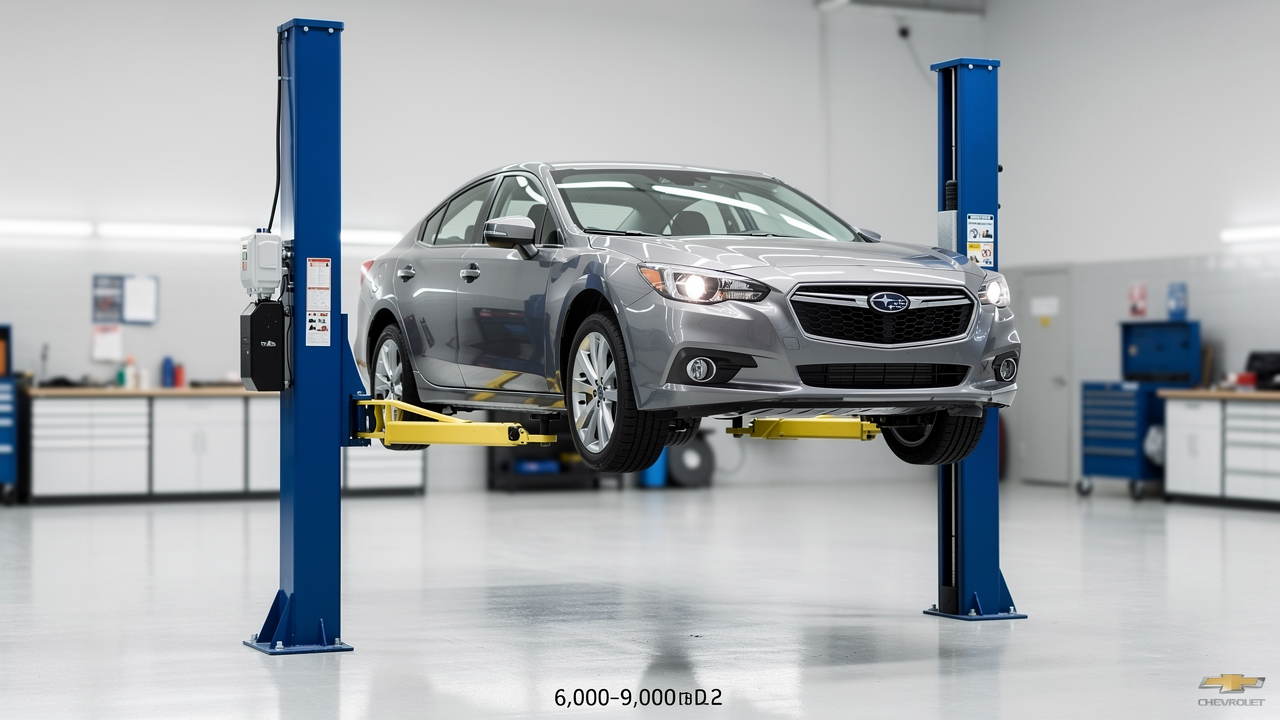
Standard passenger car lifts max out around 9,000 pounds. They simply cannot safely service commercial trucks. The Atlas Heavy-Duty 12,000 lb 2-Post Lift ($2,899) provides the baseline capacity needed for most semi truck service work.
Weight distribution varies by truck model and configuration. Day cabs weigh less than sleeper cabs. Newer trucks with emissions equipment add extra weight over the front axle.
Commercial Fleet Service Equipment Safety Standards
OSHA requires automotive lifts to have safety factors built into their ratings. The lift must handle 150% of its rated capacity during testing. This means a 12,000 lb lift actually tests to 18,000 pounds.
Commercial fleet operations face stricter inspection requirements than passenger vehicle shops. Your insurance and liability coverage depends on using properly rated equipment.
The BendPak HD-12 12,000 lb Two-Post Lift ($3,199) meets all current safety standards for commercial truck service. It includes automatic safety locks and meets ALI/ETL certification requirements.
Fleet managers often specify minimum equipment standards for their approved service locations. These typically require 12,000 lb minimum capacity for any facility servicing their trucks.
Heavy Vehicle Maintenance Lift Installation Requirements
Installing heavy-duty lifts requires proper foundation work. The concrete must be at least 6 inches thick with proper reinforcement. Most installations need 4,000 PSI concrete minimum.
Electrical requirements increase with lift capacity. 12,000 lb lifts typically need 220V single-phase power. Some models require three-phase power for faster lifting speeds.
Ceiling height matters for truck service. Semi trucks stand 13.6 feet maximum legal height. Add lift height and you need at least 16-foot ceilings for basic service work.
The Atlas Garage Pro 10,000 lb Symmetric 2-Post Lift ($1,599) works for smaller commercial trucks and delivery vehicles. However, it falls short for full-size semi tractors.
Choosing the Right Capacity for Your Shop Operations
Consider your customer mix when selecting lift capacity. Mixed-use shops serving both cars and trucks often choose 12,000 lb lifts for versatility.
Higher capacity lifts cost more upfront but expand your service capabilities. They also provide safety margins when servicing loaded delivery trucks or RVs.
Symmetric vs asymmetric post design affects truck positioning. Symmetric lifts work better for trucks with long wheelbases. Asymmetric designs optimize car service but limit truck access.
Plan for future business growth. Installing a higher capacity lift now costs less than upgrading later. Foundation work and electrical upgrades represent the largest installation expenses.
Common Installation and Operation Mistakes
- Underestimating foundation requirements - Weak concrete leads to lift failure and safety hazards
- Ignoring ceiling height limitations - Trucks won't fit under low ceilings even with proper lifts
- Choosing wrong post configuration - Asymmetric lifts limit truck positioning options
- Skipping proper electrical installation - Inadequate power causes slow operation and motor damage
- Missing safety certifications - Non-certified lifts void insurance and create liability issues
Regular maintenance keeps heavy-duty lifts operating safely. Check hydraulic fluid levels monthly. Inspect cables and chains for wear. Test safety locks before each use.
Train all operators on weight limits and proper positioning. Even 12,000 lb lifts have weight distribution limits that operators must understand.
Frequently Asked Questions
Q: Can a 10,000 lb lift handle semi truck service work?A: Most semi trucks exceed 10,000 lb front axle weight. A 12,000 lb minimum capacity provides necessary safety margins for commercial truck service.
Q: What's the difference between ALI and ETL certification for truck lifts?A: ALI (Automotive Lift Institute) sets safety standards while ETL provides third-party testing verification. Both certifications ensure the lift meets current safety requirements.
Q: Do I need three-phase power for a 12,000 lb truck lift?A: Most 12,000 lb lifts operate on single-phase 220V power. Three-phase power provides faster lifting speeds but isn't required for basic operation.
Q: How much concrete thickness do heavy-duty lifts require?A: Minimum 6 inches of 4,000 PSI concrete with proper reinforcement. Some manufacturers specify 8-inch thickness for 12,000 lb capacity lifts.
Explore Our 10,000-12,000 lb Heavy Duty 2-Post Lifts Collection
Our heavy-duty lift collection includes certified models for commercial truck service. All lifts ship with installation manuals and technical support. Free shipping and hassle-free returns ensure your complete satisfaction.